My Weekend Managing The Some Good Ideas Stage At Camp Good Life
By Will Merison
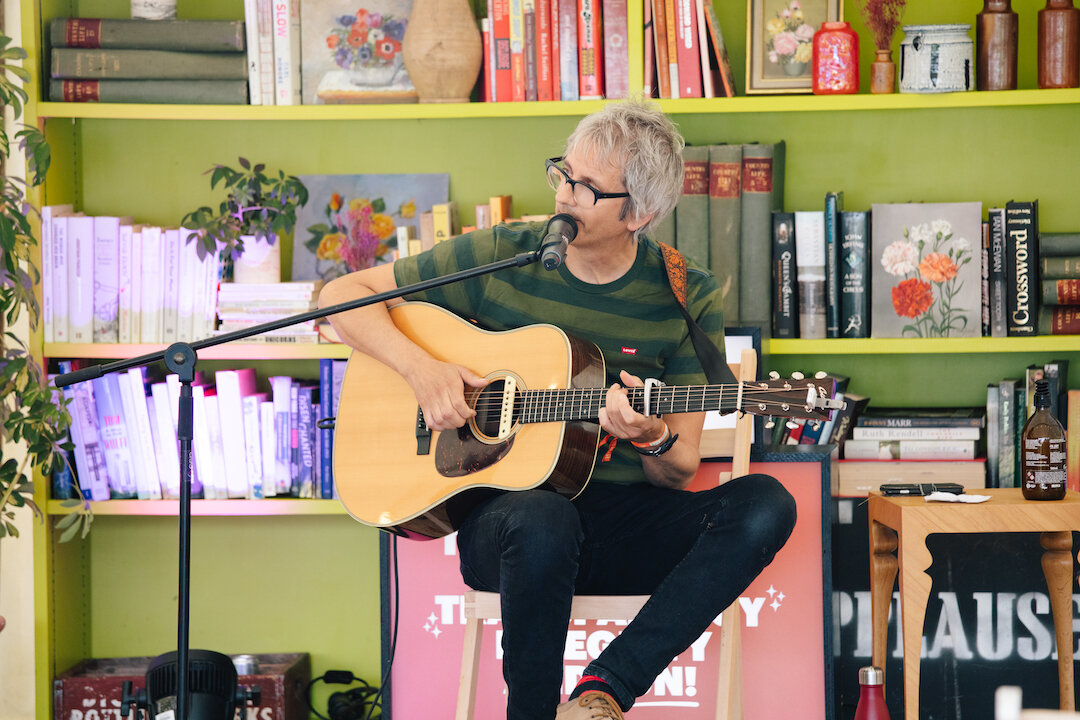
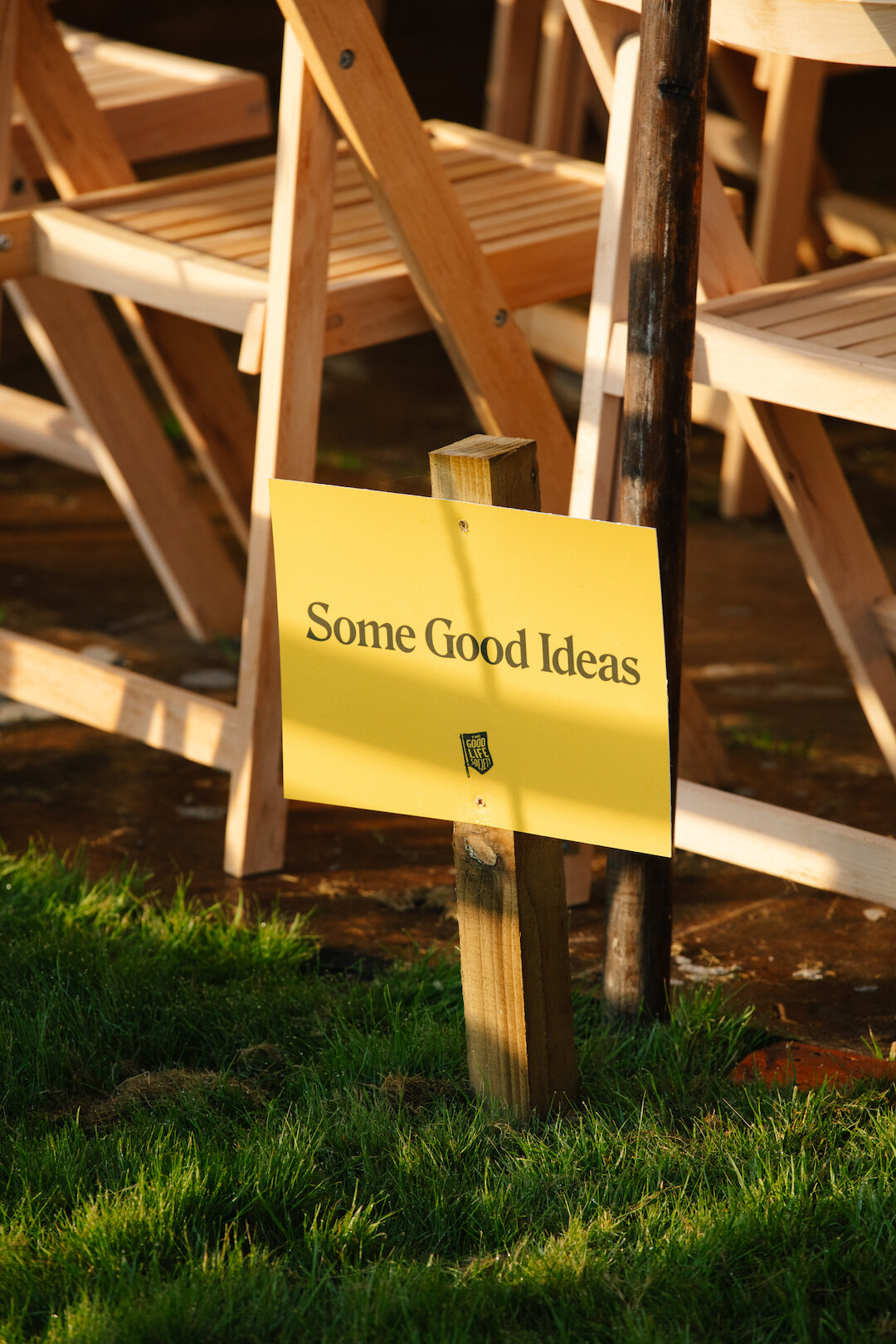
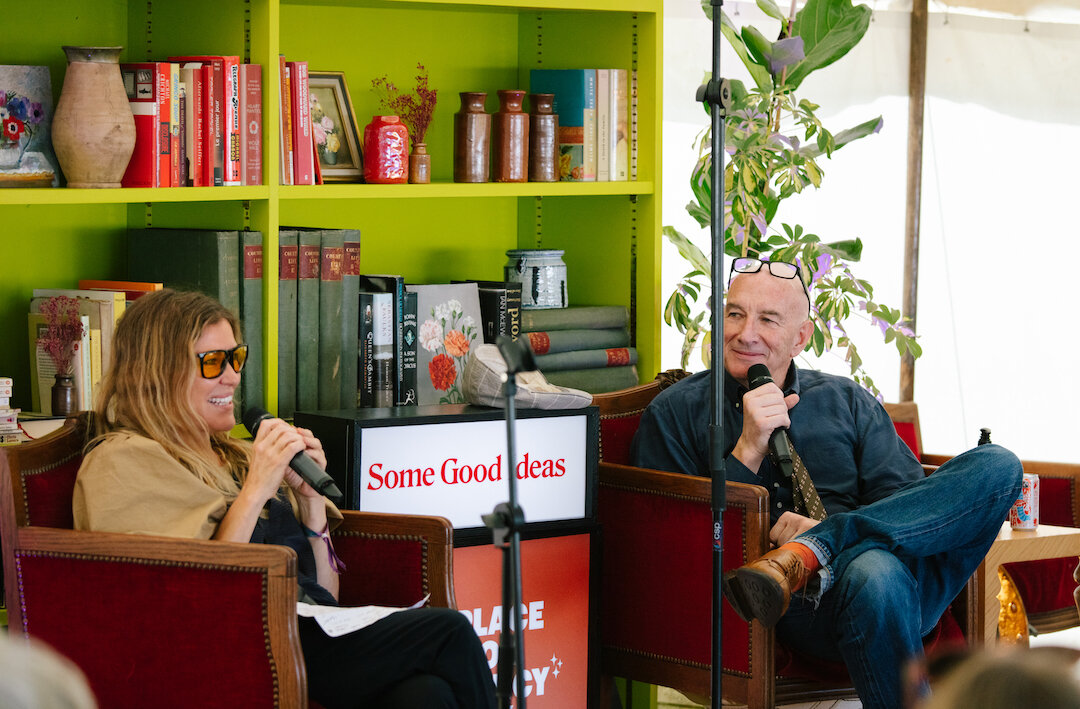
Imagery by Department TwoThe Some Good Ideas stage at Camp Good Life was a melting pot of, well, good ideas, and it was my job all weekend to manage the stage.
It’s a great job. I have done it for a number of years now and I think I am starting to get the hang of it - I'd call myself a semi-professional at this point on the basis that there is still about half I don’t know.
So here are my five top tips to managing a stage successfully (expect tips 6-10 in 2031 when I will be fully professional):
ONE.
Your stage must be tidy and chairs must be neat. Much harder than it sounds, especially early in the morning if people are using the chairs to nap. Move them slowly so as not to wake them.
Two.
Your microphones need to be working. Say “check check” into the mic with confidence so people think you know what you are doing.
Three.
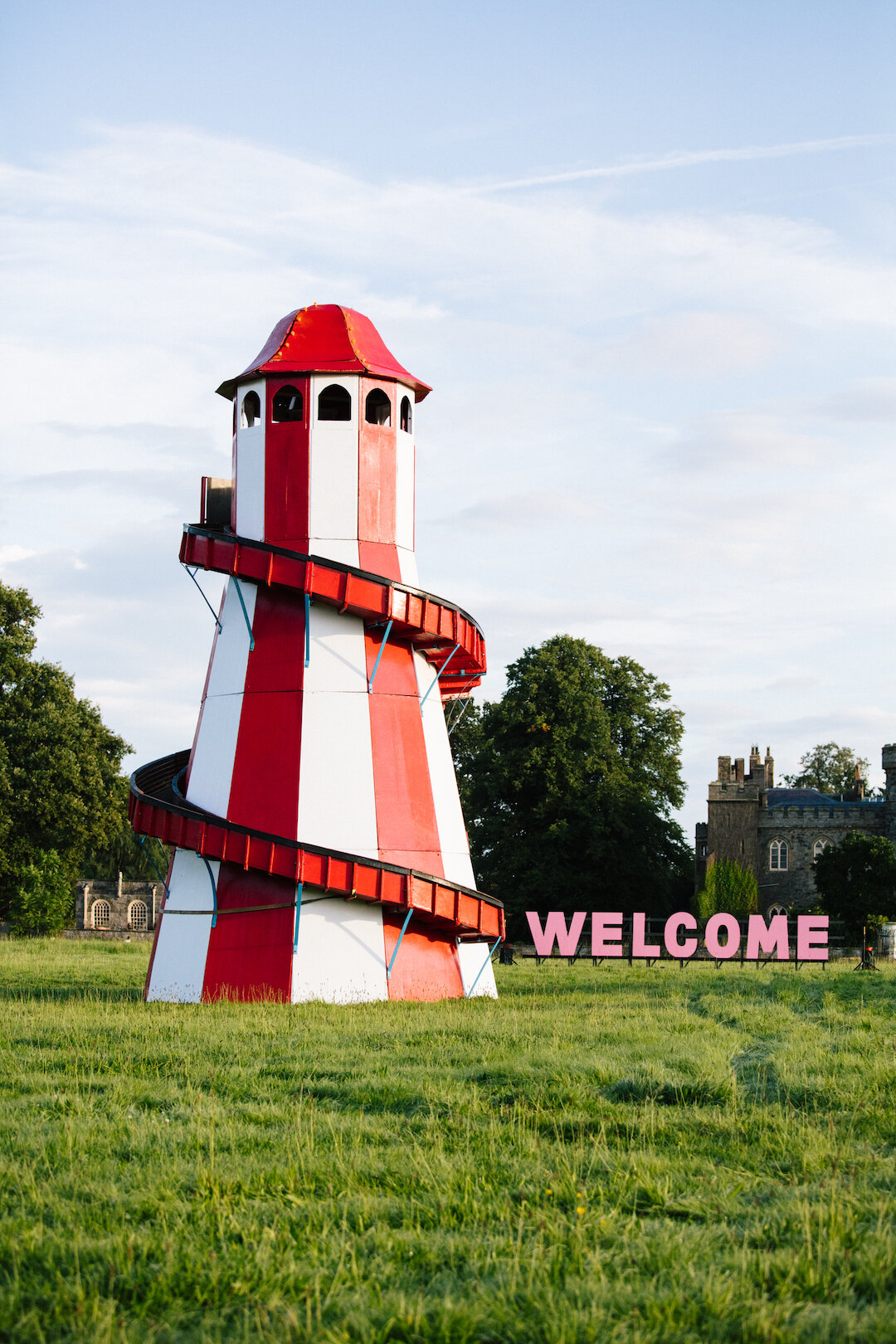
Get your acts to the stage. Armed with phone numbers and bad signal you must track down whoever is on next. Most of the time the person you are looking for is, in the Good Life’s case, on the helter skelter.
Four.
Listen to each talk start to finish. This is the best rule. The trick is to look like you are on hand to help if anything goes wrong, when in reality you are just enjoying the talk.
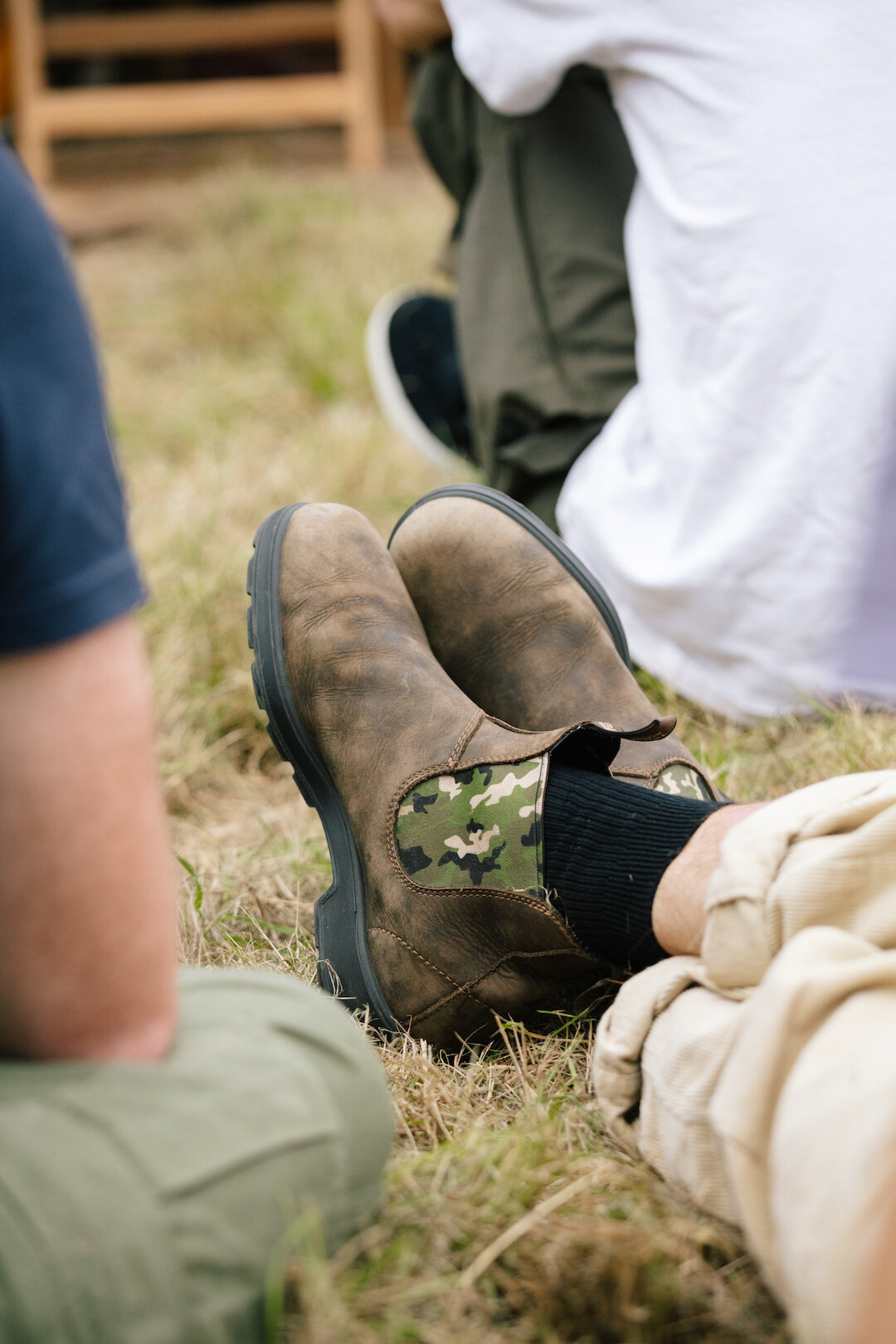
Five.
Now it is time to get the performer off the stage. Subtlety is key. You cannot panic them. Catch eye contact, nod knowingly and lift your palm up to indicate that they have five minutes left. Simple.
N.B. I have never had someone not leave the stage so I am unclear about what the next move is. There is always next year…
So I’ll hopefully see you in 2022 for another incredible year of events by The Good Life Society where you will be able to see me further perfecting the art of stage management.
Good goods. Transparently priced.
Honestly, we think that this is a perfect piece of clothing. It’s the first item to be made under our new brand, SGI Threads.
Please scroll down the page to view more images.
First a bit of history.
A lot of people associate our work with Pedlars and The Good Life Experience with the classic vintage workwear jackets that we used to sell. We sold thousands over the course of many years and about twenty years ago we even designed and sold our own British-made version. Either it wasn’t very good, or it was ahead of its time because it didn’t sell well.
Ever since then we have wanted to do another. Now every fashion company makes one and so in order to stand out we decided to try to make one that is truly exceptional. And we genuinely believe that we succeeded.
(Keep reading, plus size info, below.)
At Some Good Ideas part of our mission is to prove that amazing goods can be made in Great Britain and in so doing to show precisely what this costs. We are happy to share any other information so that you, too, can make things here.
At Some Good Ideas we make goods in Britain using the finest components. This is a way to guarantee the very best quality and to prove that it can be done in Britain; it may not be the easiest thing and it definitely isn’t the cheapest, but it is worth the effort. Part of our challenge is that we’re designing our own things and choosing the components, rather than going to a factory -which would be a lot easier- and just saying ’those things you make, please make some for us in a different colour’.
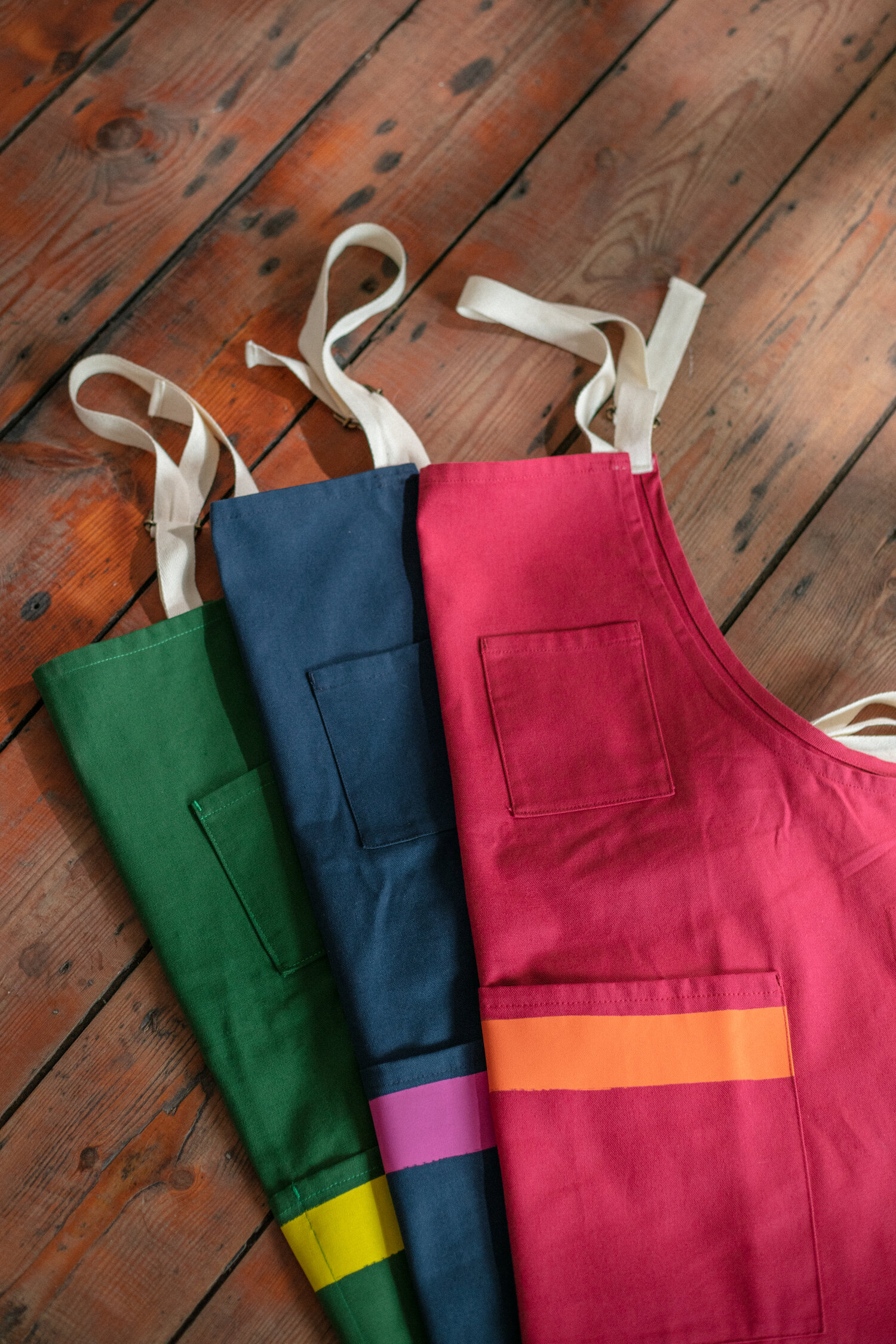
Anyway, here is our apron. It’s taken us five months to build this and it was worth the wait. The original idea was to see if we could make an apron for the staff in The Glynne Arms, one of our sponsors, that reflected their keen eye for the provenance of their food and drink. And, we succeeded. But we’ve made some for other people too -you!- and here they are.
Manufactured in Ipswich. Screen printed in Huddersfield. Tape made in Cheshire. Labels designed and printed in London. Buckles and fabric from Europe.
Everyone needs a To Do list. So, why not buy this one?
Its paper was milled in Scotland, the printing was done in England using Dutch manufactured mineral based inks and vegetable based inks, the glue is from the West Midlands, the manufacture took place in Lincolnshire, the photographs were taken in Sheffield and the design was created in London.
That’s a lot of information for a To Do list, but we’re proud of these facts.
We haven’t cut corners, we’ve kept production in Britain and we’ve paid the people involved a fair price at every step.
This is a To Do list that champions proper manufacture and design.
It’s also just really, really useful.
You should buy one.
100 sheets.
The notepaper in this book is made in Cumbria and the end leaves are made in Britain too, by GF Smith. The cover card is recycled board and is made in Scandinavia.
The book in entirely made in Stamford, GB on a machine built in 1948 and the thread is strong natural linen.
It’s a lovely thing with a mix of lined, checked and plain paper and there’s an elasticated closure.
To find out more about the manufacture and costs involved in making these notebooks, scroll to the bottom of this page where we’ve included lots of detail.
These mugs were hand made in Stoke-on-Trent by someone who is relatively new to the manufacture of tableware but who is employing time-proven, traditional methods of manufacture. The method employed here uses machinery that luxuriates in the unusual name of a Jigger Jolly; this sounds to us like something made up by Roald Dahl but is in fact a piece of machinery that enables the potter to make specific shapes.
This style of mug is a traditional one called a Telford and it uses locally sourced stoneware clay which is strong, vegan and natural. The stripes have been applied by hand using traditional lithographing techniques.
To find out more about the manufacture and costs involved in making these, scroll to the bottom of this page where we’ve included lots of detail.
This was designed for us by colour specialist and designer Gail Bryson and is made in Great Britain. It was printed in Sheffield using environmentally safe inks on Fairtrade organic cotton. The label is also printed in Britain. The cotton was grown on a single origin farm in India which has a long and close relationship with the printers.
To find out more about the manufacture and costs involved in making these towels, scroll to the bottom of this page where we’ve included lots of detail. We’re really trying to be transparent here, because our mission is not just to sell great things but to help people to understand that it’s possible to make good things in Great Britain and what, precisely, this costs. We aim to pay everyone fairly, to make things as sustainably as possible and to support British manufacturers. Inevitably, this means that our goods will cost more than most others, but we think that that is a price worth paying and hope that you’ll agree.
These joyful pencils are made by long-established specialists in Nottingham. The sturdy box (which will last a lifetime in its own right) is made using traditional stitch methods in Nottingham.
The wood used in the pencils is Weymouth Pine which is widely regarded as one of the finest woods for pencil manufacture; it was approved by the Programme for the Endorsement of Forest Certification.
To find out more about the manufacture and costs involved in making these pencils and boxes, scroll to the bottom of this page where we’ve included lots of detail.
Sold as a boxed set of four.
A book by Charlie Gladstone, co-founder of Some Good Ideas, The Good Life Society, Hawarden Estate Experience, Glen Dye Cabins & Cottages, Pedlars and many more.
Words by Charlie.
Illustrated by Matt Blease.
Cover design by James Victore.
Published by our friends at The Do Book Co.
We’re really proud of this book which includes instructions for 35 activities that are suitable for all ages and abilities. This is a book oozing fun, inspiration, knowledge and passion.
The Hand Book started life as a pamphlet that was designed to keep people connected to The Good Life Experience during the weird summer and autumn of 2020. But as we received submissions, we rapidly understood that we had something special on our hands and decided to make a proper book. This was something we’d dreamt of doing for a few years and hadn’t quite got around to; and now it was happening.
Here you’ll find detailed instructions for all sorts of activities from natural dyeing to podcasting, from cooking to learning about trees, from fly fishing to natural navigation, all of which are written eloquently and passionately by experts.
This is a good book. Why?
Because the funds raised by this book will do something amazing. If you can afford to contribute to our 50/50 Project please do so by using the payment value of your choice.
The 50/50 Project was conceived in the weirdest spring most of us will ever know. Lockdown was imposed and, within days, endless creative freelancers lost all of their work.
We have a number of small businesses and creative freelancers are our people. We are their community and they are our community. We need them and they need us. Without hesitation, we decided to commit to employing 50 people for 50 days, paying them what they would normally charge.
Set of 7 Pin Badges.
Join the Lockdown Loaf Club.
These are baking badges of honour, for the new baker and the old, messages of encouragement and words of advice.
Find out more about the Lockdown Loaf Club here and your chance to win these badges.
This is a good tea pot.
It’s good because it is made in Britain, it looks amazing, it works well and it’s ethically sourced. Our tea pot was designed by 1882ltd in Stoke-on-Trent by 5th generation makers. No corners were cut in making this product.
We hope that you appreciate its deep integrity and that it offers you years of satisfying use.
To find out more about the manufacture and costs involved in making these tea pots, scroll to the bottom of this page where we’ve included lots of detail. We’re really trying to be transparent here, because our mission is not just to sell great things but to help people to understand that it’s possible to make good things in Great Britain and what, precisely, this costs.
We aim to pay everyone fairly, to make things as sustainably as possible and to support British manufacturers. Inevitably, this means that our goods will cost more than most others, but we think that that is a price worth paying and hope that you’ll agree.